
 Français
  Nederlands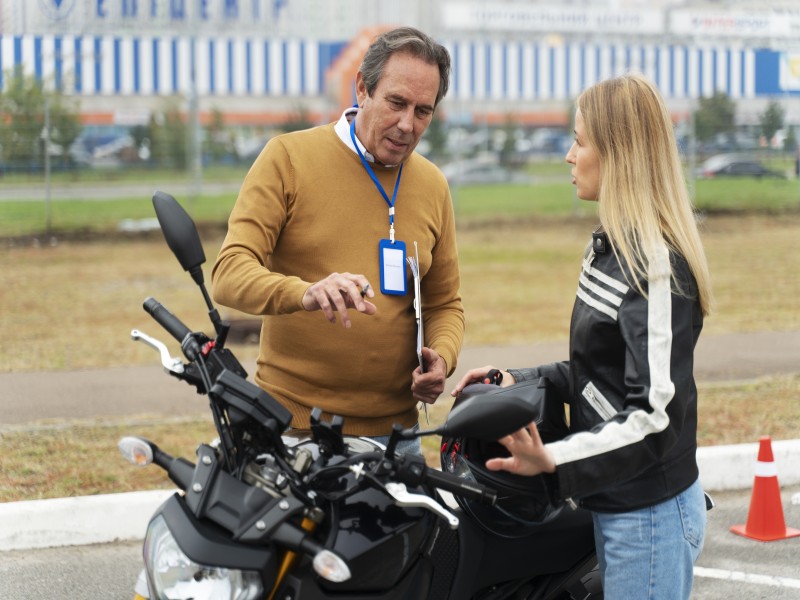
The First Step: The Theoretical Part
Obtaining a moped license in Belgium, officially known as the Rijbewijs AM, is for many young people the first step towards personal mobility and independence on public roads. This license is mandatory for anyone from the age of sixteen who wants to ride a moped or light quadricycle with a maximum engine capacity of 50 cc and a maximum speed of 45 kilometers per hour. The process to obtain this document is structured and always begins with preparing for the theoretical part. Candidates must prove they have a thorough command of traffic rules before they are allowed on the road. This theoretisch examen consists of forty multiple-choice questions, where the candidate must give at least thirty-three correct answers to pass. Good preparation through recognized driving schools or self-study with up-to-date study materials is essential to maximize the chances of passing and to lay a solid foundation for practice.
The Mandatory Practical Training at the Driving School
Once the theoretical exam has been successfully completed, the next phase of the learning process begins: the praktijkopleiding. In Belgium, it is legally required to complete a minimum practical training of four hours at an authorized driving school. During these intensive hours, the candidate learns the basic skills of riding a moped under professional guidance. The training is carefully divided into two equal parts. The first two hours take place on private property, focusing on vehicle control, slaloming, braking techniques, and maintaining balance at low speeds. The remaining two hours are spent on public roads, where the candidate learns how to navigate real traffic safely and defensively. This structured approach ensures that aspiring riders not only master the technique, but also learn to anticipate unforeseen situations in daily, busy traffic.
The Practical Exam and Official Tests
After completing the mandatory driving lessons, the candidate must take the praktische rijexamen to prove that he or she is competent to ride independently. This exam is conducted at an official examination center and consists of various tests on a closed terrain that assess basic skills. For several years, according to Belgische wetgeving, an exam on public roads is no longer required for the AM category, which somewhat lowers the threshold, but makes the emphasis on vehicle control on private property all the greater. It is crucial that the candidate remains calm and performs the learned maneuvers accurately. If the candidate passes, they will receive an application form for the final driving license, which must be requested in person at the local town hall and officially and legally allows them to take to the road.
Administration, Costs, and Road Safety
In addition to exams and practical training, obtaining a driving license naturally also entails the necessary administrative obligations and financial costs. The total cost is variable and consists of the fees for the exams, the costs for the mandatory hours at the driving school, and the municipal tax for the actual creation of the physical document. Furthermore, starting riders must take into account the mandatory third-party liability insurance and the purchase of approved protective clothing, including a helmet, gloves, and a sturdy jacket. After all, safety remains the absolute priority on a two-wheeler. It is important to remember that possessing an AM license also brings a major social responsibility towards other vulnerable road users. By strictly complying with traffic rules and driving defensively, young moped riders actively contribute to a safer and smoother traffic environment for everyone in Belgium.